

As educators, you understand why your English language learners need future-ready skills. What may be challenging is finding relevant, practical, and age-appropriate ways to integrate these skills into your classroom.
In the first installment of our blog series, explore why decision-making, or the ability to evaluate information, weigh alternatives, and make informed decisions in academic, professional, and everyday contexts, is important for English language learners’ future-readiness—along with some simple tips to help you build this skill.
Why decision-making matters
For English language learners, decision-making is a valuable skill that can help them engage more confidently in a variety of settings, especially in their future careers. A 2025 analysis by the Burning Glass Institute and the Alliance for Decision Education found that 41% of more than 6.8 million U.S. job postings from 2022–2024 mentioned at least one skill associated with effective decision-making, such as problem-solving, critical thinking, or strategic thinking.
Learners already make decisions every day, big and small, from how to approach a class assignment to how to respond to a problem. One way to foster future readiness is giving them opportunities to practice this skill effectively and consistently throughout their learning experience.
This practice can help learners approach classroom learning, everyday situations, and the workforce with a better understanding of not only how to make thoughtful decisions, but also why those decisions matter.
How to help students build decision-making skills in the classroom
Here are a few examples from National Geographic Learning programs that you can try out in your own classroom.
Make the decision-making process visible
One decision can involve multiple factors and several steps. One way learners can break down the decision-making process into clear steps is through a visual, like a flow chart. For example, in Unit 8 of Life, Third Edition, Level 4, learners answer a series of questions about what to pack for a trip, explore how different answers result in different outcomes, and then create their own flow chart.
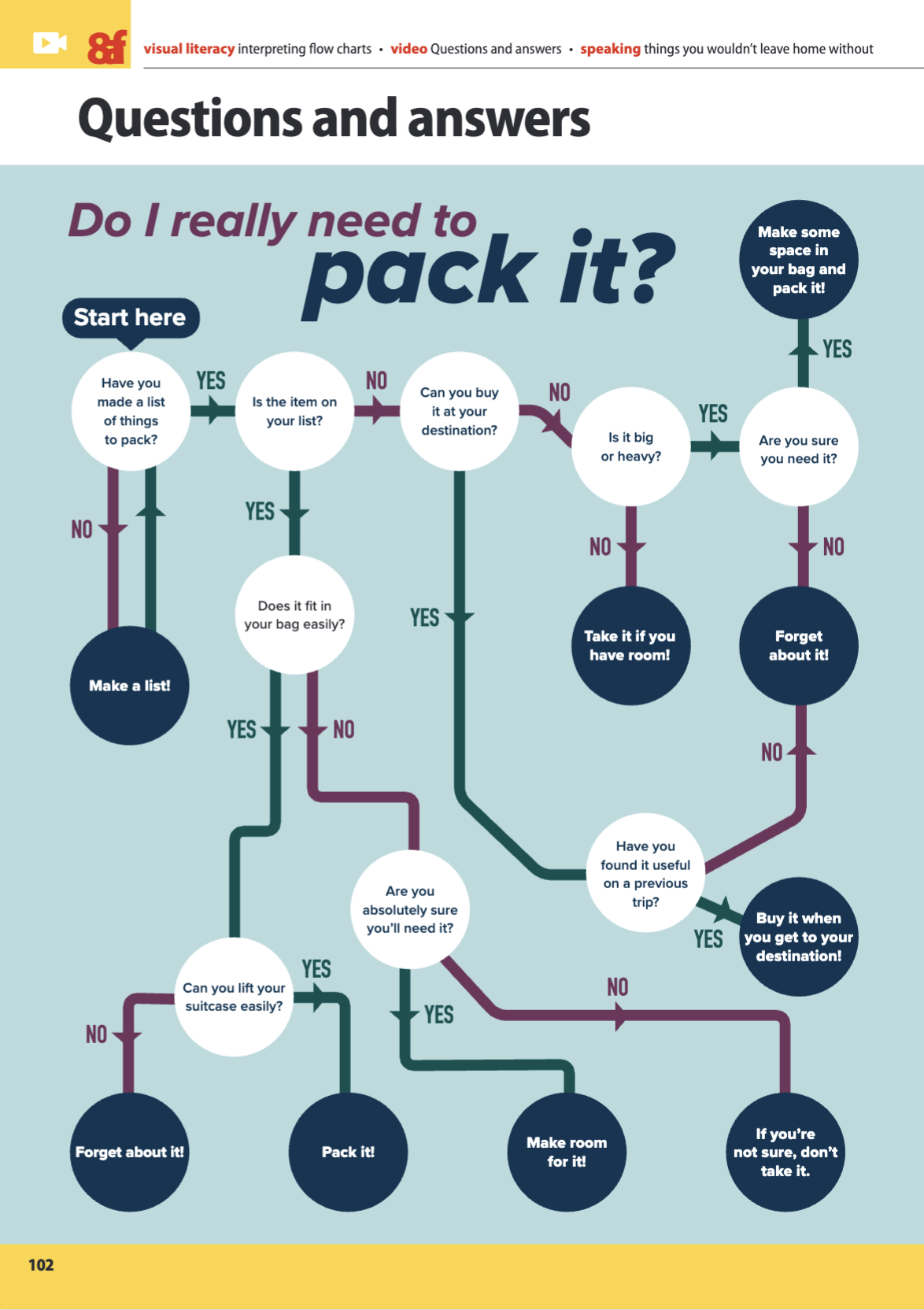
Classroom tip: Have your learners create a simple flow chart to help them make a real-life choice. Ask them to identify the questions they need to answer before reaching their decision.
Help students reflect on how they make decisions
Reaching a decision is one part of the process. But asking students to reflect on how they arrived at a decision is just as important. In a lesson from Voices, Level 7, students are asked to recall an idea they had, discuss how they came up with it, consider whether collaboration helped, and compare their decision-making experiences with classmates. If students understand why certain factors influenced their decision, they’re more likely to carry that knowledge into future decisions.
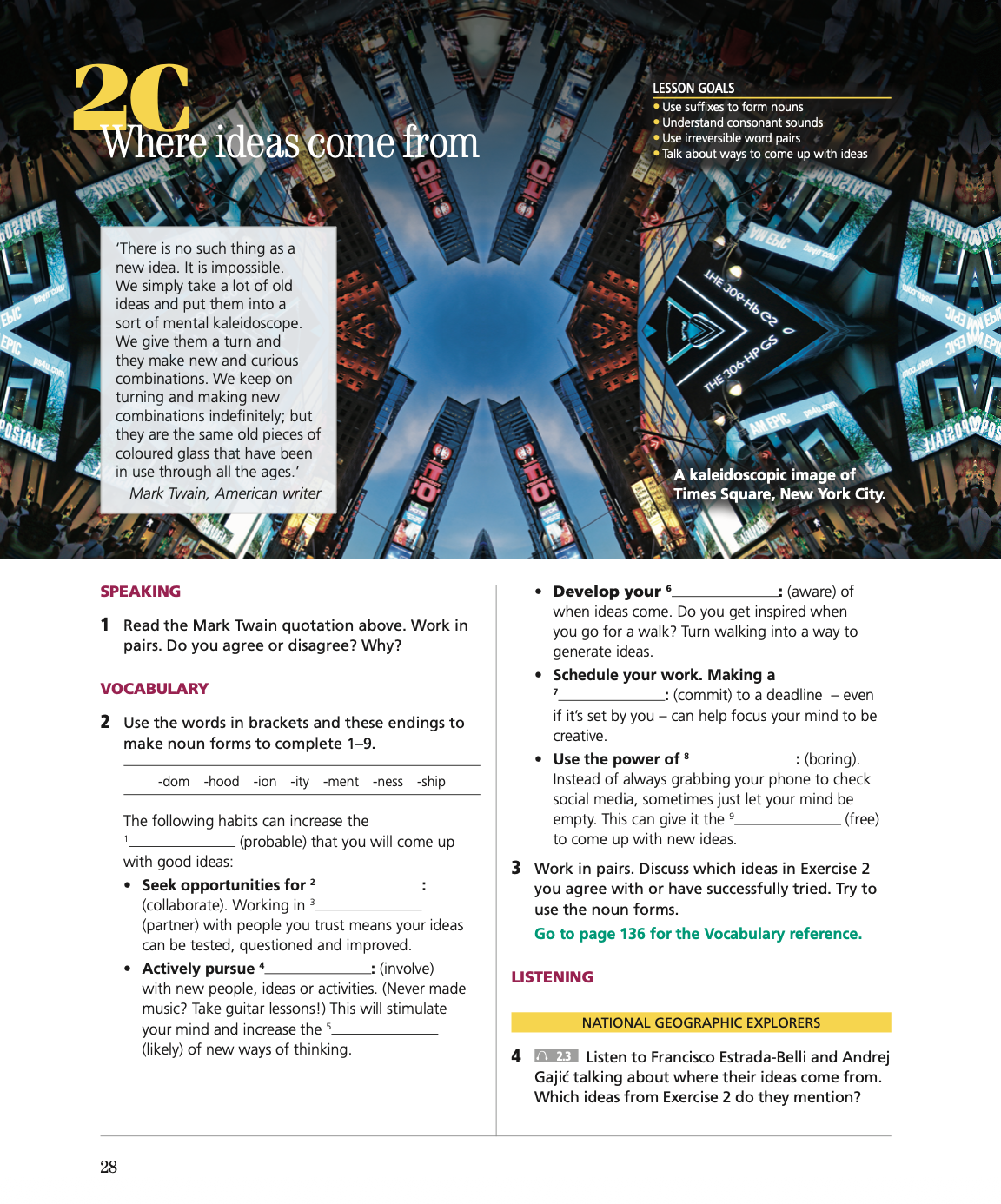
Classroom tip: After a classroom decision-making task, add a short reflection step: How did you reach your decision? What helped you? Did another person change your thinking? What would you do differently next time?
Give learners practice making choices
Giving learners the opportunity to make choices helps them practice using their own judgment and taking ownership of the outcomes. This works well for young learners in addition to older learners. A tip from the the Look, Level 2 Teacher’s Book suggests letting students choose between classroom-task options, guiding them through their choices, helping them identify pros and cons, and using a vote to reach consensus when a group decision is needed.
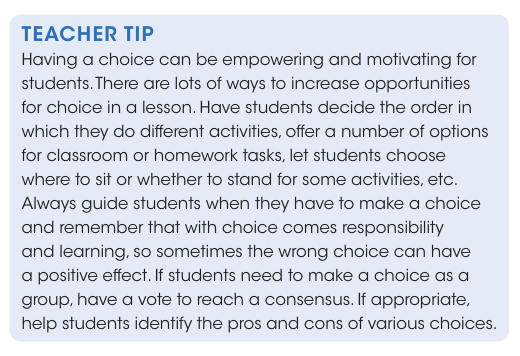
Classroom tip: Offer two or three options, help students think about the advantages and disadvantages of each, and ask them to explain their choice.
Help students decide how to demonstrate their learning
Decision-making can become part of the classroom learning experience. For teen and young adult learners, offering different options to demonstrate learning can also create opportunities for self-expression. In one unit of Impact, Second Edition, after learning about re-wilding, students choose how to demonstrate their learning. One option is to independently plan how they would re-wild a local space. Another involves working with a partner to research a real re-wilding project.
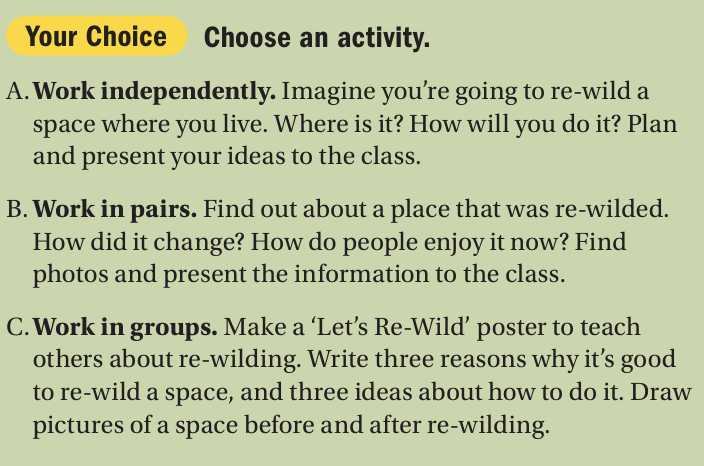
Classroom tip: Rather than assigning everyone the same final activity, give learners two or three options that meet the same learning objective—whether it’s creating a poster, recording an interview, writing a short response, or giving a presentation. Ask students to consider and explain which option best suits their interests, strengths, or the message they want to communicate.
Curious about additional future-ready skills for your English language classroom? We’ll be back with another installment of our blog series next month.