


For a few years, I taught returnee high school students at a private secondary school in Tokyo, Japan. Even though the students were all returning to their English language studies, their actual English ability, especially in terms of reading and writing, varied widely. Their interests varied even more widely. For example, one of my students was a semi-professional skateboarder, another was a world-class ballerina who traveled and performed across the globe, and yet another aspired to be an aeronautical engineer and wanted to spend more of her class time studying rockets.
Some students found the lesson content too easy. Others had little interest in studying English, as they were already fluent, and others lacked confidence and felt they didn’t even belong in the class.
If you have ever left class wondering how to reach every single learner where they were at while still maintaining some semblance of cohesion in the course, you are not alone. Enter differentiated instruction.
What is Differentiated Instruction?
Differentiated Instruction (DI) is often misunderstood as creating thirty different lesson plans for thirty different students. A better way to think about DI, however, is to imagine having a common learning destination (the lesson objective remains the same for everyone), but with students taking different possible routes to get to that final destination.
“Differentiated Instruction is not about creating thirty different lesson plans; it is about creating thirty different ways to succeed.”
Differentiated instruction does not have to be difficult. Let’s look at some simple ways that we can make differentiation a reality in our classrooms.
Navigating the Three Paths of Differentiation
To make differentiation manageable, we can make small, intentional adjustments to content, process, and product. Let’s take a look at each of these in detail:
- Differentiating and Multimodal Content (The “Input”): This is about what the students use to learn. Instead of five different topics, choose one great topic with varied access points. If the lesson is about “Clean Water”, for example, you can provide the core text to some students, an authentic higher-level text to others, a captioned video to a third group, and an infographic to a fourth group.
- Differentiating Process (The “Sense-Making”): This is how students process the information. While the whole class reads a story excerpt on animal intelligence, for example, one group might draw a picture of what comes next in the story, while another group answers open-ended reflection questions and yet another group writes their own ending to the story, or re-writes the same scene from a different point of view.
- Differentiating Product (The “Output”): This is how students show what they’ve learned. Instead of a mandatory 200-word essay, offer a “Project Menu.” Students can choose to write a blog post, record a 60-second “field report” video, or design a poster on a sub-topic of their own choosing. In my own classes, I use the digital whiteboard, Figjam, to create and share these, but there are other options like the Classwork within Microsoft Teams, Miro, or even using the board in the classroom.
Differentiation as a Bridge to the World
In a National Geographic Learning classroom, the world is our curriculum. But the “world” is not a monolith, and neither are our students. Differentiation allows us to move beyond the top-down “one-size-fits-all” model and begin to treat our students as the unique individuals that they are.
“When we provide multiple paths to understanding, we aren’t just teaching English – we are treating our students as the unique individuals that they are.”
I like to use the “mirror” and “window” analogy to help visualize how this works. Effective differentiation allows students to see themselves in the material (the mirror) while gaining a clear view (the window) of cultures and lives different from their own.
Another useful technique is to have students work in flexible groups—where a student who is a visual artist, for example, collaborates with a student who is a strong writer. Giving students the responsibility and sense of ownership in deciding the collaborative partnerships on their own also increases learner agency. They learn that everyone brings a different skillset to the table, depending on their own individual strengths and interests. Let’s take a look at some specific practical examples from my own classes, using National Geographic Learning’s Lift, which is the perfect program to develop advanced literacy and academic language skills with higher-level students.
Case Study: Lift in the Mixed-Ability Classroom
Example 1: Lift Unit 2 – “Clean Water for the World”
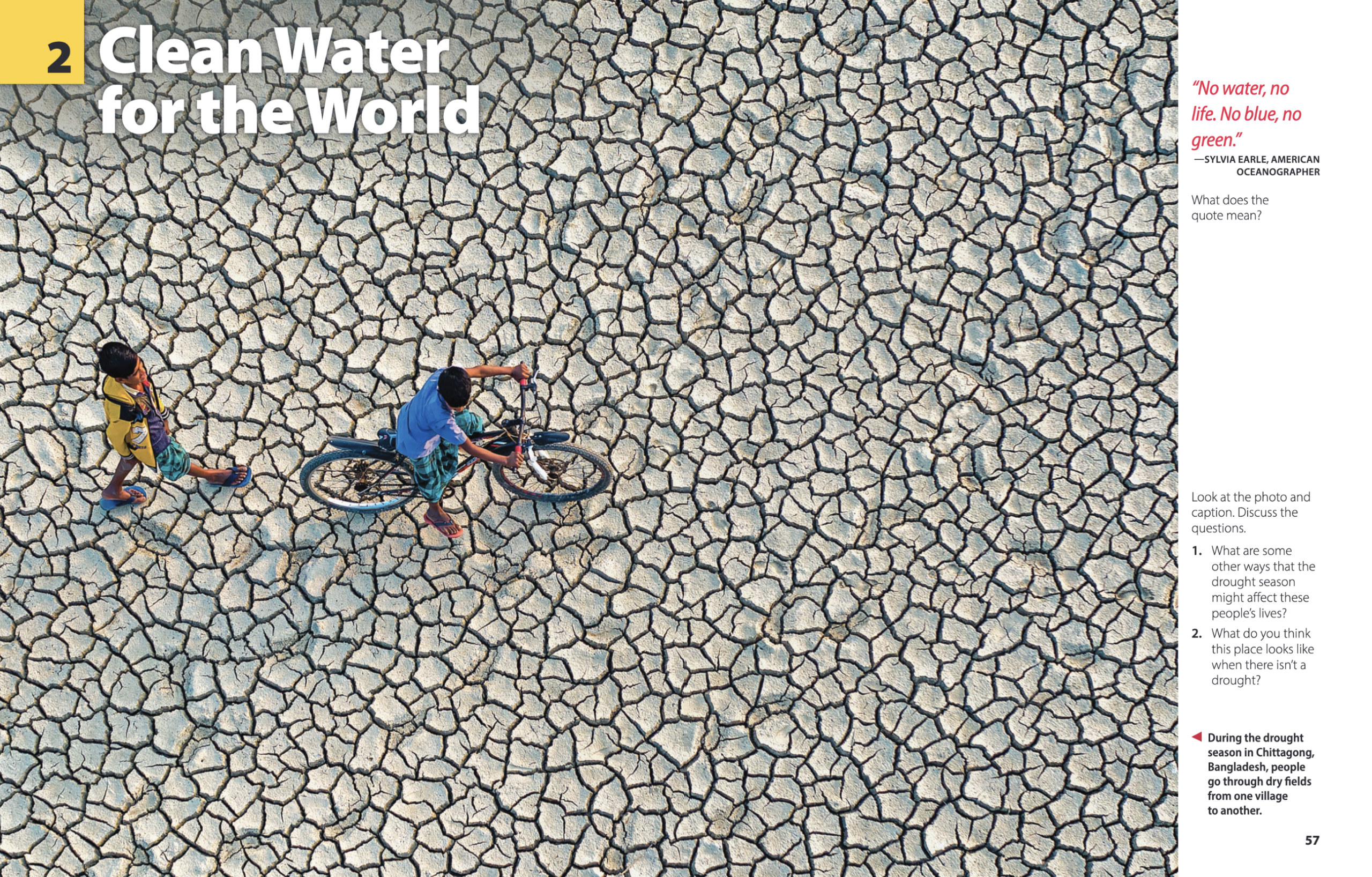
- The “Support” Path: Students label a diagram of a community well or a water filtration system using key terms like source, filter, and scarcity.
- The “Stretch” Path: Students watch the video about Singapore’s innovative methods to capture water and use a T-Chart to compare their own daily water usage with that of a peer in a different climate.
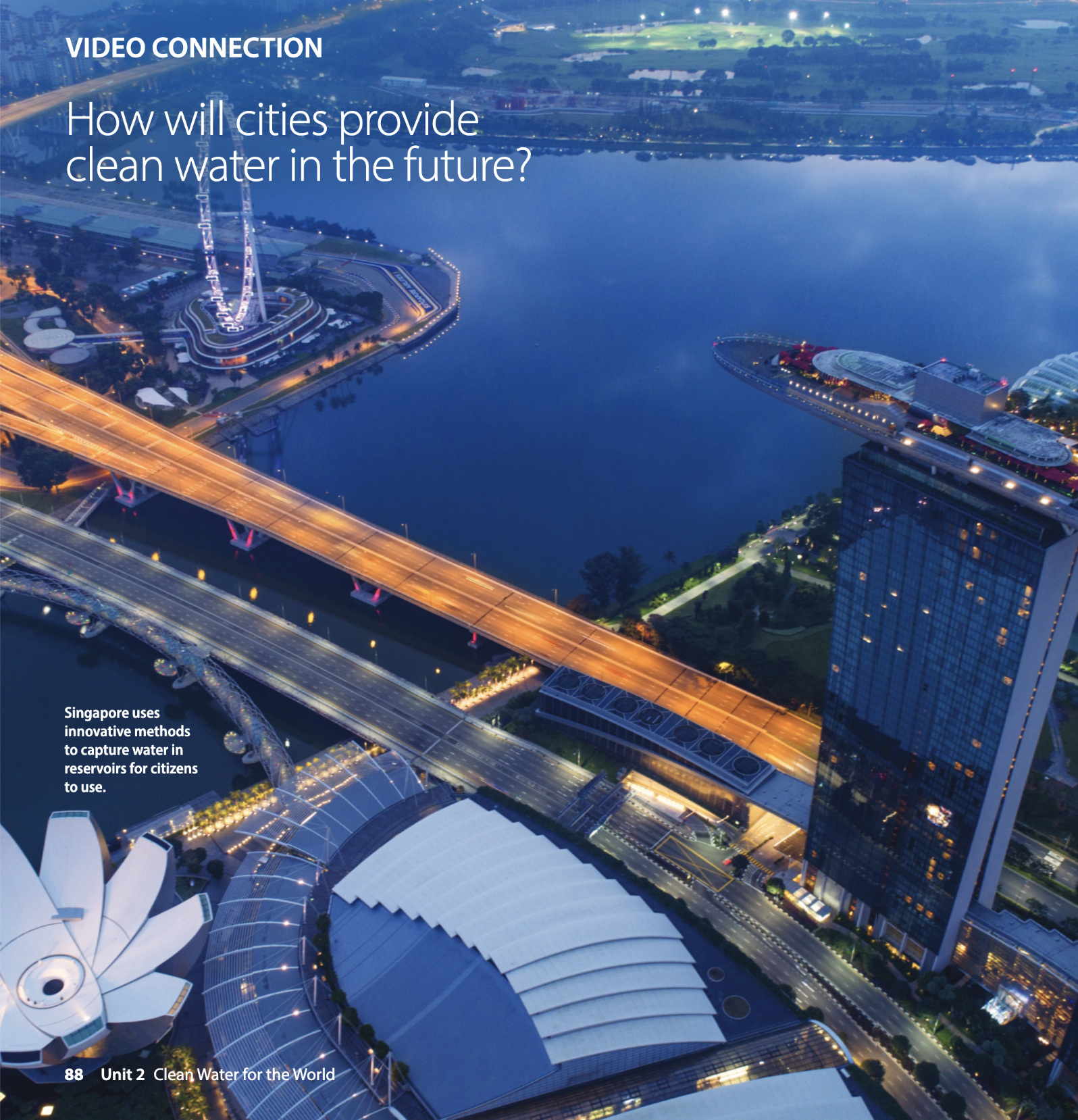
- The Choice: The class creates a “Water Awareness Campaign.” Students choose to design posters (visual/text) or create a 30-second advertisement to create awareness about where their local water supply comes from (audio/speaking).
Example 2: Lift Unit 5 – “Wisdom of the Wild”

- Tiered Reading: When exploring how animals solve problems, Group A (The Detectives) uses a version of the text with bolded keywords and a “Who/What/How” organizer. Group B (The Analysts) reads the original text and prepares a “Scientific Journal Entry” predicting future animal behaviors.
- Tree-Leaf-Sky Framework: I use a “Tree” “Leaf” “Sky” framework for project menus in my classes, with “Tree” projects being mandatory, “Leaf” projects being optional, and “Sky” projects as bonus projects for extra grades for students who are interested in exploring the topic even further. I’ve attached a screenshot below.
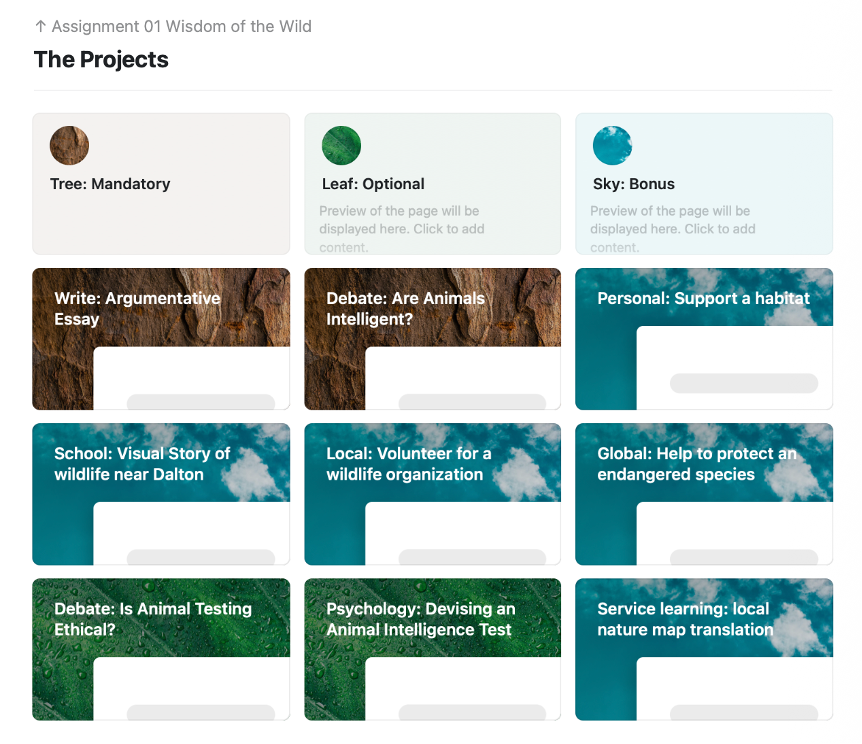
I’ve provided examples from Lift, but if you teach beginners or mid-level students, other National Geographic Learning courses such as Impact and Keynote include a variety of ready-made differentiated learning activities in their lesson plans.
The Final Word: Differentiation Means Progress, Not Perfection
Differentiation is less about creating a perfect, individualized path for every student every day and more about intentional variety. By providing different choices and personalization opportunities, we can help ensure that every student—regardless of their current English level or interests—remains as engaged and motivated as possible.
Reflection Task: Think of your most diverse class. What is one small “choice” you can offer them in your next lesson to help them find their own path?
Want more tips and real‑world insights from ELT professionals? Subscribe to our global newsletter and stay connected with educators around the world.



Hi Kaj
I have great respect for your insights and professionalism and really enjoyed reading this piece.
I can see how some high level International schools here in Japan could benefit from this.
How can this be applied to an Eikaiwa setting in Japan.
I really look forward to the Primary School applications.
Pieter