

Feedback is one of the most powerful forms of communication and one of the most important tools educators have for supporting students’ growth. As Future-Ready Skills have expanded beyond the original 4Cs, communication remains at the heart of learning. It is through communication that we develop new skills, build relationships, and make sense of the world around us.
Feedback plays a critical role in that process. We know it can create powerful change for the better. So why does the idea of giving feedback so often make us uncomfortable?
Giving or receiving feedback is often an intimidating process. However, as educators, the ability to give and accept feedback graciously is an essential professional skill. This does not mean agreeing with everything, but being able to consider it and decide what is worth taking on board. This is where we are given genuine opportunities for growth.
In schools, feedback should be part of the culture. When our students see us participate in respectful feedback and make changes towards improvement, we normalize these as part of the learning process and environment. Together we become lifelong learners with a growth mindset.
Creating a feedback culture
Individual feedback
One of the easiest ways to start creating your culture of feedback is to ask for it! It is not necessary to wait for someone to initiate — you can ask your colleagues yourself.
“Today I tried implementing something in class — how do you think I could do it better?”
“I have these results from my classroom. Do you think I could improve them?”
Once you show openness, this creates trust and others become more willing to hear back from you and each other. Meaningful change can start with a small shift.
Giving feedback may be a little trickier. It’s important to set the scene and ask — not everyone is mentally prepared to receive feedback unexpectedly, so checking whether it is the right time can reduce defensiveness. Thoughtful phrasing can also help, for example:
“I have a thought that I’d like you to try out.”
“I think this suggestion could really support you.”
Group feedback
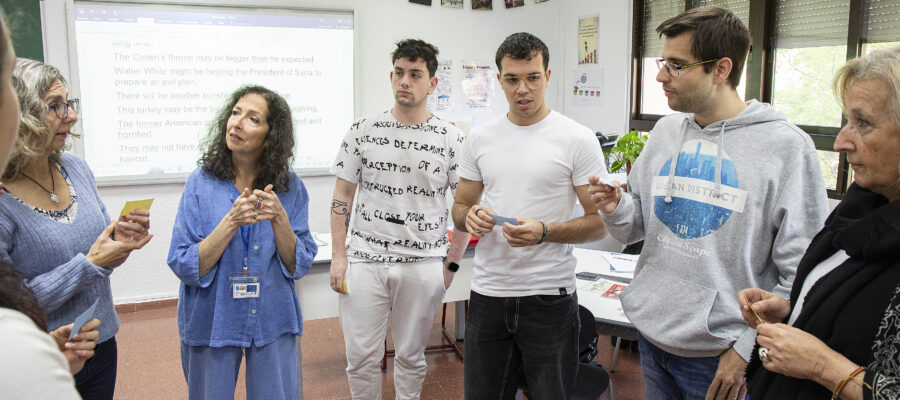
Beyond sharing individual feedback, creating a space where everyone can consider “what can we all do better?” encourages shared reflection. Here’s how to do this:
- Remember that group feedback sessions should focus on sharing tools for growth, not criticism. Creating this mentality of acceptance, as well as clear expectations that everything said must be constructive, means that feedback is more likely to be heard and acted on. Many shy away from the idea of group feedback sessions, but they can reduce the feeling of being personally singled-out, so that feedback becomes a tool for improving together.
- In a group setting, it is also important to align around a clear purpose: “We are looking for opportunities for growth.” Maintaining a hopeful tone is key to create positive and lasting changes. Encourage participants to respond with appreciation rather than reacting.
- It is also important to go beyond performance, and consider behaviors. Is this person a team player? Where have they shown leadership? Assessing our own 21st century skills helps teachers better understand how they look in practice, and how to foster them in students.
- Active listening is essential here — not just speaking, but also listening with empathy. The goal is not to convince or defend, but to learn from a moment of open dialogue. When challenges arise, go back to your shared goals and work from there to realign your points of view.
- For a first-time group session, beginning with positive reinforcement can help set the tone before moving into constructive feedback. Invite colleagues to share general holistic feedback on the positive qualities they recognize in each other:
“Maria has great creative skills. Whenever I hear about her different activities, I feel inspired to try something new. I think this really helps us remain innovative as a team.”
“Jorge shows strong attention to detail. I respect his punctuality and focus and think this shows professionalism.”
Structuring constructive feedback effectively
Apart from setting the right atmosphere, how you phrase constructive feedback to colleagues will also define how well it is received. There are many formulas that exist, but this three-step structure I use is simple and effective:
1 – INFORM: Give the specific facts of what happened. Describe what you really needed or wanted from your colleague, and compare this to what the reality was. The information needs to be objective and factual to ensure clear understanding without emotion or opinion:
“Thank you so much for standing in for my class yesterday. When I spoke to my students, it seemed like they had not had the chance to advance their projects. The lesson plan was to advance Unit 4 and take half an hour to coordinate their projects.”
“I got your class grades this morning. Remember that these were due on Monday and you had said that you would get them to me before the end of that day. Today is Thursday, so they are quite late.”
2 – IMPACT: Here you mention how it affected you, if applicable, so that they are able to understand the impact beyond their own perspective. This makes the feedback meaningful, allowing them to logically understand the need for change:
“I really needed them to advance their projects yesterday, as we have exam preparation the rest of the week. This means I need to redo my next lessons to recover that time.”
“Remember that students need to know these grades before they are able to enroll in their next course. It’s stressful for them to not know, and a delay like this means that there is more risk of them missing the deadline.”
3 – INVITE: Invite them to work together to improve. This helps them align with your expectations more closely next time. Ideally, end this part with a question:
“I think we should try ___. What do you think?”
“Do you have any ideas?”
“Please let me know if there was some difficulty with the lesson plan I hadn’t considered. Do you think there is something to adjust for next time?”
“Next time, what support do you need to meet the deadline?”
Structuring positive feedback effectively
Part of creating a culture of feedback is giving positive reinforcement. This shouldn’t just come from coordinators or directors, but from peers as well. Beyond just saying “great job,” try applying the same steps to inform, impact, and invite:
“I noticed you have been trying out more creative classroom dynamics lately. I think students are responding really well, and it’s inspired me to to try out more variety in my activities. If you ever have time to collaborate on ideas, let me know.”
Specific positive feedback provides clarity on what is working well and supports professional growth.
Conclusion
It’s not easy to make change just because you read an article. We all sometimes avoid uncomfortable conversations or situations that would make us feel vulnerable. Yet here Vygotsky’s concept of the Zone of Proximal Development is relevant: within our comfort zones, we do not grow.
How do we improve if we do not face the areas where change is needed? If we remain comfortable, how do we recognize where growth is possible?
Growth requires reflection, practice, and self-awareness, especially in moments when we feel challenged or emotionally reactive. But by approaching and delivering feedback with openess, clarity and empathy, we create stonger professional communities and opportunities to grow into the type of teacher we aim to be.
Want more tips and real‑world insights from ELT professionals? Subscribe to our global newsletter and stay connected with educators around the world.