

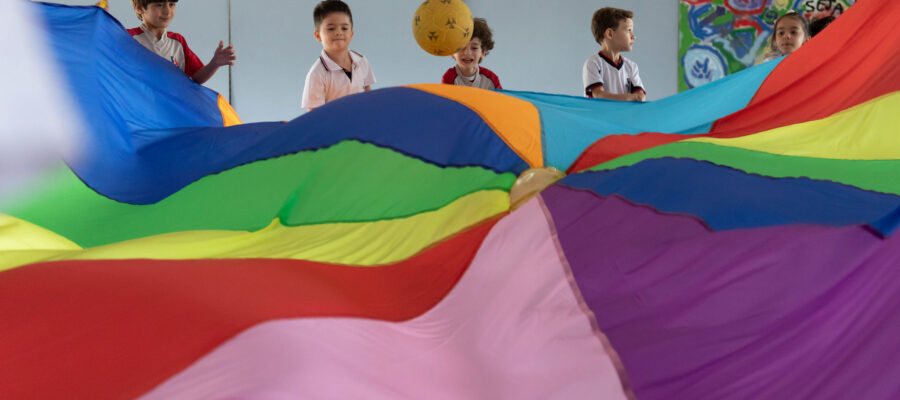
“But if they do not have any worksheets, how do we know they are ‘actually’ learning?”
Having worked as an educator and school leader in Japan for over 20 years, I have noticed that many families feel there is not any learning happening within play-based classrooms. In this context, play-based learning means a child-centered approach where children learn through active exploration and play, with guidance and support from teachers. However, schools in Japan are increasingly recognizing the need for more balanced alternative methods of learning that are relevant for children now. In Japan and around the world, areas such as social-emotional development are becoming an important focus in young learner classrooms.
Why Play-Based Learning Is Important
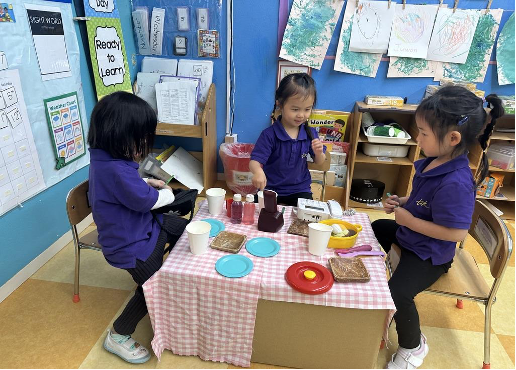
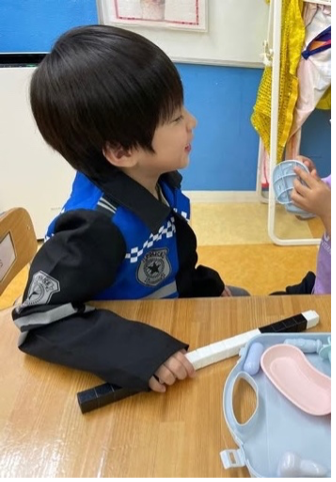
Real-life scenarios are how children learn: from setting up a ‘Doctor’s Office’ and seeing ‘patients’ to constructing ‘towers’, being a ‘bus driver’ and driving the ‘passengers’ to their chosen locations, or even having a ‘picnic’. These scenarios help children engage with their own learning while also making sense of the world around them. They are making choices and developing their executive function, social negotiation, and symbolic representation skills.
Why Paper Doesn’t Equal Learning
As educators, educational leaders, and curriculum specialists, we are often asked why there are no textbooks, no worksheets, or no homework for students. And this question follows: “But how do we ‘know’ they are learning if there is no paper or writing based outcome?”
The answer is simple, but often hard to grasp for those outside the educational context. Ultimately, learning is so diverse and multi-faceted it is not restricted to one clear visual outcome. Receiving a piece of paper or a completed workbook does not, as we know, mean a child has ‘learned’ a concept. It also does not illustrate the depth of the learning, the ability to apply that learning in a new context, or how that learning could be extended. As educators, we know we need to focus on all these areas to encourage, engage, support, and extend knowledge and learning.
What Research Tells Us About Play-Based Learning
Rightly or wrongly, our knowledge of what learning is, is shaped by our own learning experiences. For many of us, learning was always teacher led and directed. That is, teachers told us what we needed to know and then, depending on our age, there was a check (often in the form of a test, worksheet, or pages in a workbook) of how much we had retained. That information determined if we had ‘learned’ it and what should be reviewed.
But this is no longer the case. Research consistently shows that play-based learning, specifically ‘guided play,’ is highly effective [Parker, R., et al. (2022), Pyle, A., et al. (2021), Wessels, S. (2023)]. It balances child-led exploration with adult support to scaffold and encourage cognitive, social, and early academic development in an integrated way.
What Play-Based Learning Looks Like in the Japanese School Context
Understanding the cultural expectations around education in Japan — and what learning looks like in Japanese classrooms — offers a useful example of how play-based learning can work in a local school context. While Japanese schooling often emphasizes structure, school readiness, and visible evidence of learning, play-based environments still support writing, preparation, and academic development through different approaches. Children are observed and supported, with learning extended through purposeful experiences that build their knowledge, skills, and confidence in developmentally appropriate ways.
For example, in a play-based classroom:
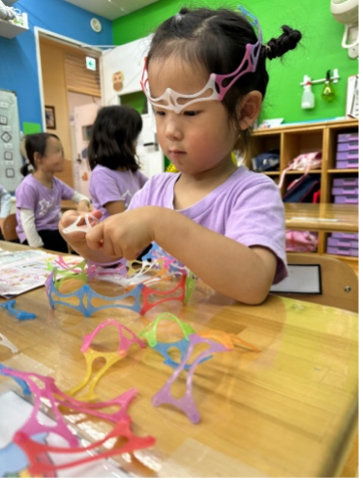
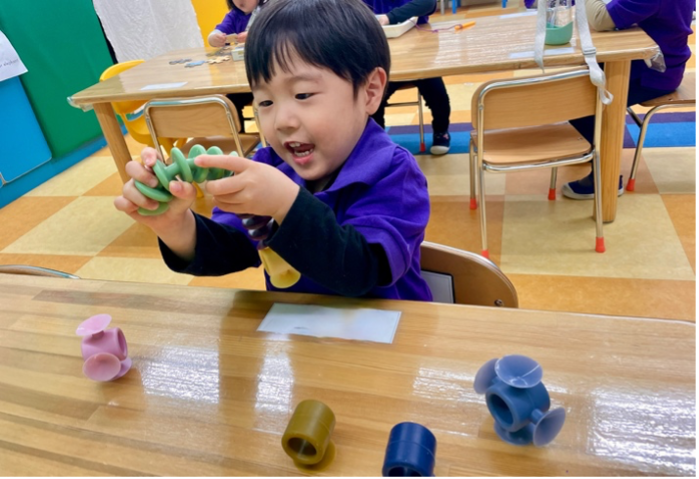
- Early literacy experiences may include tracing, drawing, mark-making, and hands-on activities using a variety of materials and manipulatives.
- Reading opportunities are often embedded throughout the environment through books, labels, posters, visual schedules, and signs with pictorial supports.
- Dramatic play areas can encourage purposeful writing through activities such as making menus, tickets, shopping lists, or receipts.
Why Involving Families Is Essential
Arguably the most important way to support play-based learning is to help families and caregivers understand how children learn through play. Open and honest communication, supported by visuals such as photos or videos along with explanations of what is taking place, can help families see learning in action and understand what is happening in the classroom. Guiding families and caregivers on the kinds of questions to ask at home also helps them understand more about what the child has learned. It not only challenges preconceived notions, but it also increases awareness and understanding. This understanding is key to changing opinions and solidifying the partnership between home and school.
Putting It Into Practice
Being able to support families to better understand what play-based learning is and how it can benefit their children involves making the learning more visible to them. Try the following strategies:
- Share photos with explanations that outline the learning that is taking place and skills that are being built (like the captions under the photos shared in this article).
- Share skills and their definitions that are embedded within different elements of play (such as communication, problem-solving, literacy, and self-regulation).
- Use conversations with families to illustrate learning over time in certain areas, focusing on the skill development and how specifically there has been improvement in these areas.
- Give the families opportunities in the classroom to observe and participate in activities that showcase what the children can do.
In Conclusion
Ultimately, play-based learning is a valuable and meaningful part of young learner education because it reflects the ways young children explore, communicate, and make sense of the world around them. As educators, we have a responsibility to help families and the greater community understand that all children learn in different ways, and that meaningful learning can and is happening all around them.
Want more tips and real‑world insights from ELT professionals? Subscribe to our global newsletter and stay connected with educators around the world.



This is such a great article. Although children learn in different ways and at their own pace, play-based learning plays an important role in their overall development and learning. Through play, children are able to explore, discover, communicate, and build important skills in a fun and meaningful way. Play encourages creativity, confidence, problem-solving, and social interaction while supporting each child’s individual interests and abilities. It also helps children develop a love for learning naturally through hands-on experiences and everyday interactions.
Thank you so much for reading, Roxas! We’re glad you appreciate the value of play for young learners – it’s absolutely essential.
Great tips! Thank you.
Thank you very much for reading!