
In Part 2 of his blog series on teaching C2-level learners, National Geographic Learning’s Alex Warren examines how we can challenge and “level up” learners by using activities that push them out of their comfort zone and develop their communication skills as well as their language skills. Read Part 1 here.
What makes a C2-level communication task effective?
As we discussed in my previous blog post, C2 learners are expected to communicate with fluency, flexibility, and sophistication. But the big question is: What makes a communicative activity truly effective at C2 level? How can these activities help learners “level up”?
First of all, C2 level activities must be purposeful and authentic. They should go beyond simply practicing specific grammar or functional language, as you find at lower levels. Instead, C2 activities should mirror the complexity of real-life communication, requiring learners to engage with abstract ideas and to adapt to different contexts. Tasks should also be more layered, with transferable/future-ready skills like critical thinking and collaboration included . However, activities should also challenge learners to use situation-appropriate language, rhetorical strategies, and pragmatic control as much as possible.
From practice to performance
In essence, C2 activities should push learners to perform, not just practice, allowing them to demonstrate mastery of both language and communication strategies. These activities reflect the goals of many C2 learners, who often thrive on challenge, autonomy, and authenticity.
For example, in this lesson from Unit 2 of Keynote Proficient level, students are introduced to the concept of scenario planning. They listen to an example and do some language work before roleplaying a scenario planning situation. During the task, students need to apply what they’ve learned, as well as the necessary interpersonal skills and strategic thinking skills.
There’s a lot going on here for learners to contend with beyond just language fluency and accuracy, but it’s this complexity that C2-level learners often want and need. Ultimately, the activity helps students develop language, communication strategies, and transferable skills.


Encouraging higher-order thinking
As we saw in the previous activity, C2 activities should also be cognitively demanding, encouraging students to use language for reasoning, persuasion, and collaboration. This could include activities that encourage clear discourse management and organization, analysis, evaluation, and synthesis of ideas. Typical C2 tasks in this category include collaborative decision-making roleplays, negotiations, debates, ethical dilemma discussions, panel discussions, problem-solving tasks, and presentations, all of which require deeper thinking for students to express and justify their ideas.
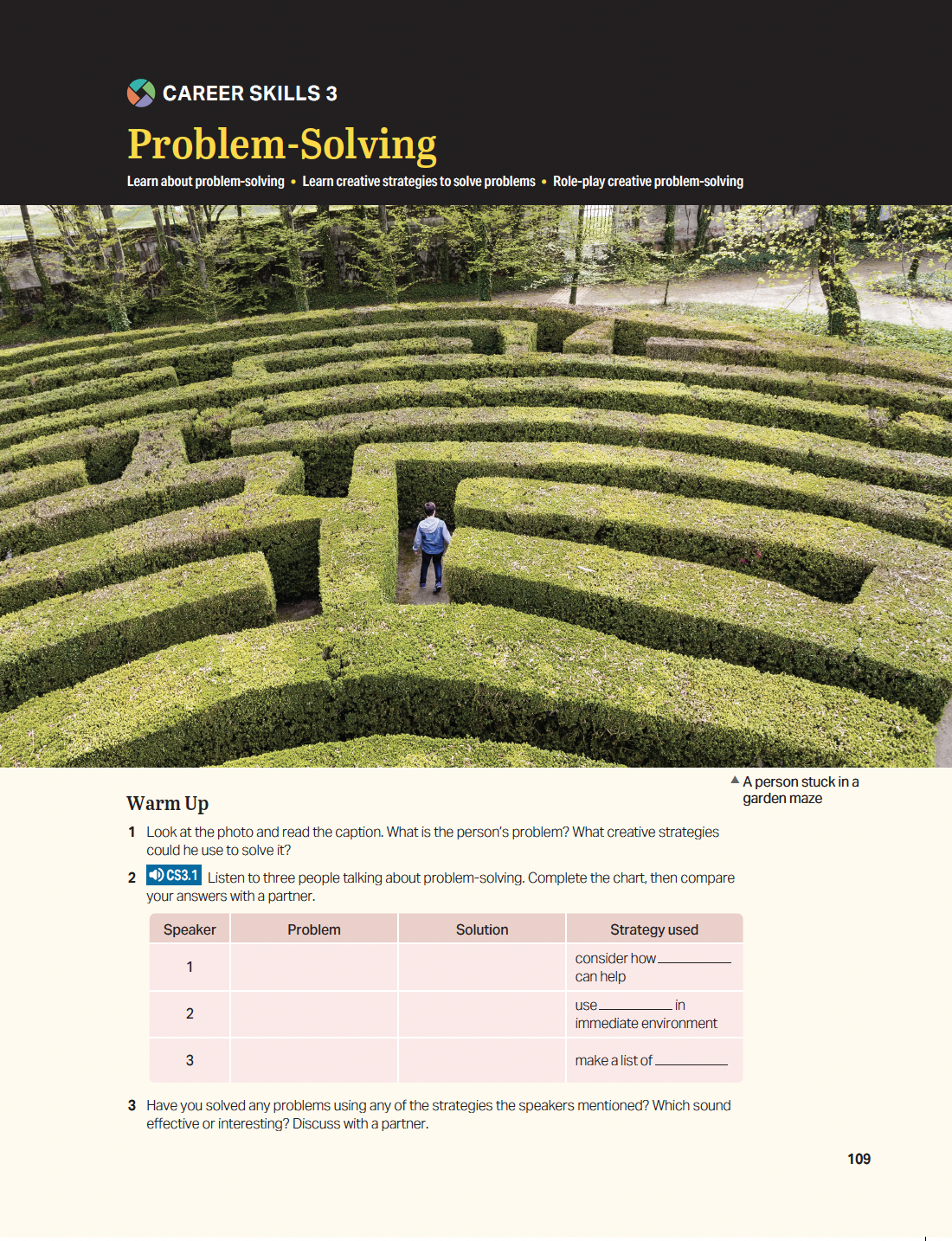
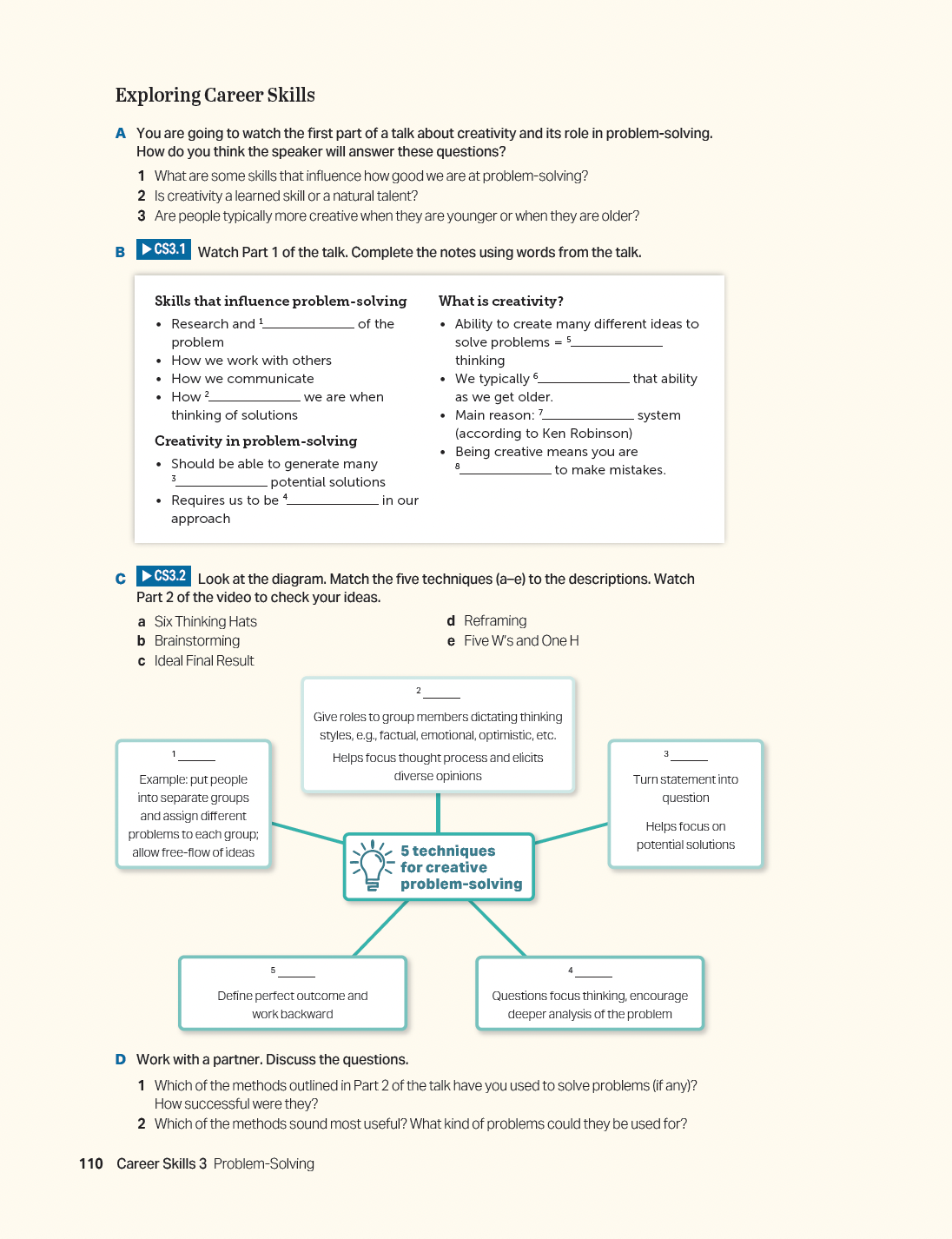
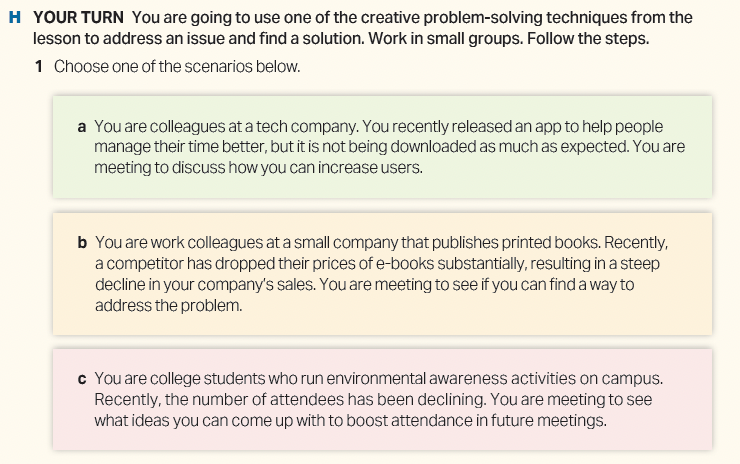
In this lesson on problem solving from Keynote Proficient Unit 7, students choose one of three real-world scenarios and must come up with solutions to the problems presented. To do this, they need to follow one of the creative problem-solving strategies presented in the lesson. While this seems like a creative thinking task, it also involves critical thinking as students need to identify reasons for the problems. In this respect, the activity ticks many of the boxes for what makes an effective C2 level task.
Simpler tasks with big impact
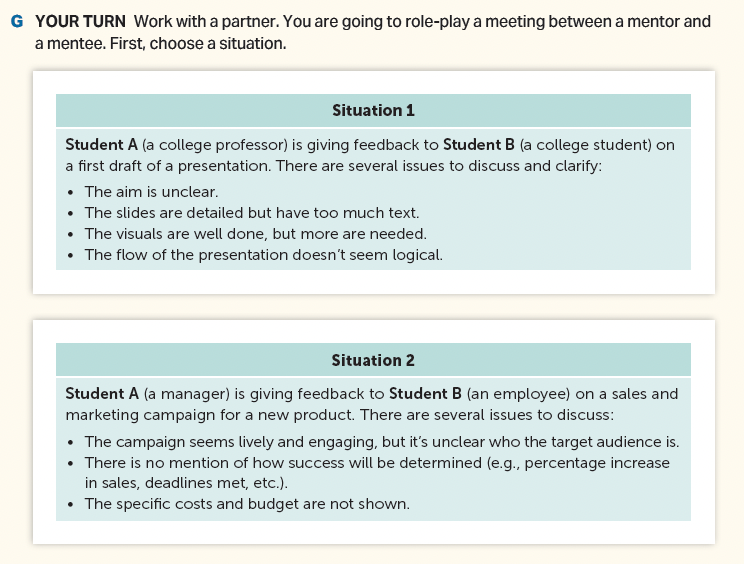
However, tasks don’t necessarily need to be complex to engage learners and get students thinking about the language and tone they use. In this activity from Keynote Proficient Unit 4, students roleplay delicate feedback situations. The task is as much about how you say something as what you actually say. Tone is vital.
The role of reflection and feedback
Another important piece of the puzzle is reflection and feedback. We need to give C2 learners the opportunity to reflect on and analyze their performances with these kinds of tasks. Getting them to record themselves and then analyze a specific area — their use of discourse markers, register, language etc. — raises their awareness and helps them identify areas for improvement.
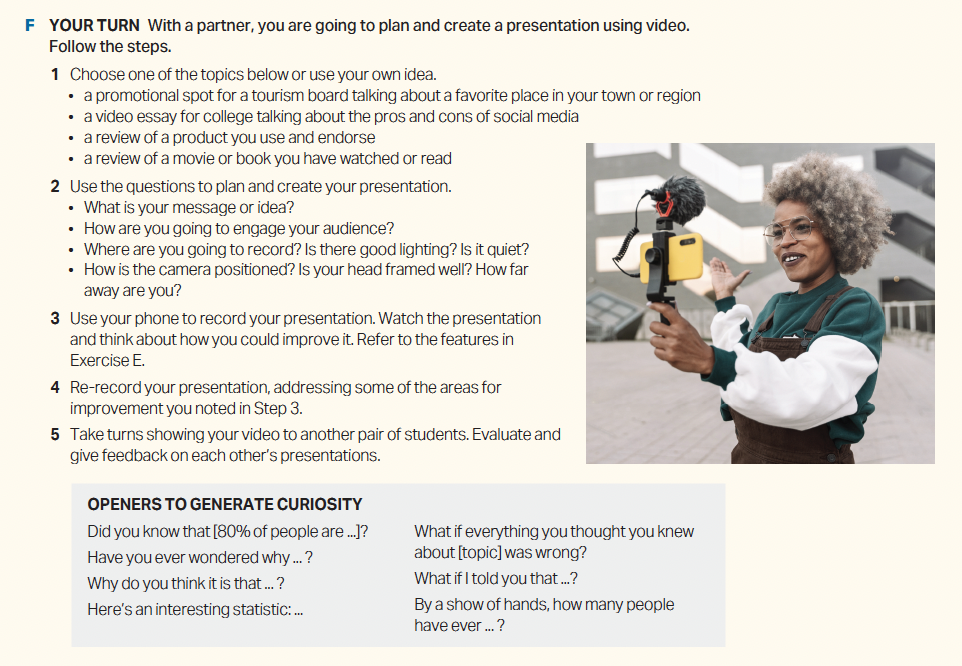
For example, in this activity from Keynote Proficient Unit 2, students are asked to record themselves giving a presentation and then watch it back with a critical eye — evaluating their delivery (tone, pace, body language) and reflecting on how they could improve on it.
This type of task should also be accompanied by teacher feedback that goes beyond grammatical, lexical, and pronunciation accuracy. While rubrics will vary depending on the task type, there should be a focus on effective task completion, communicative impact, discourse management, pragmatic competence, argumentation, collaboration, and communication strategies.
In conclusion, helping C2 learners elevate their communication skills means building both language skills and the ability to express ideas clearly and effectively. By using real-world tasks that push students beyond just fluency and accuracy, we can help empower our learners to become not just proficient speakers, but compelling and powerful communicators.